



Islay
Ìle
A small Hebridean island whose peat-fired malts taste like the sea is in the room with you.
peat · iodine · smoke
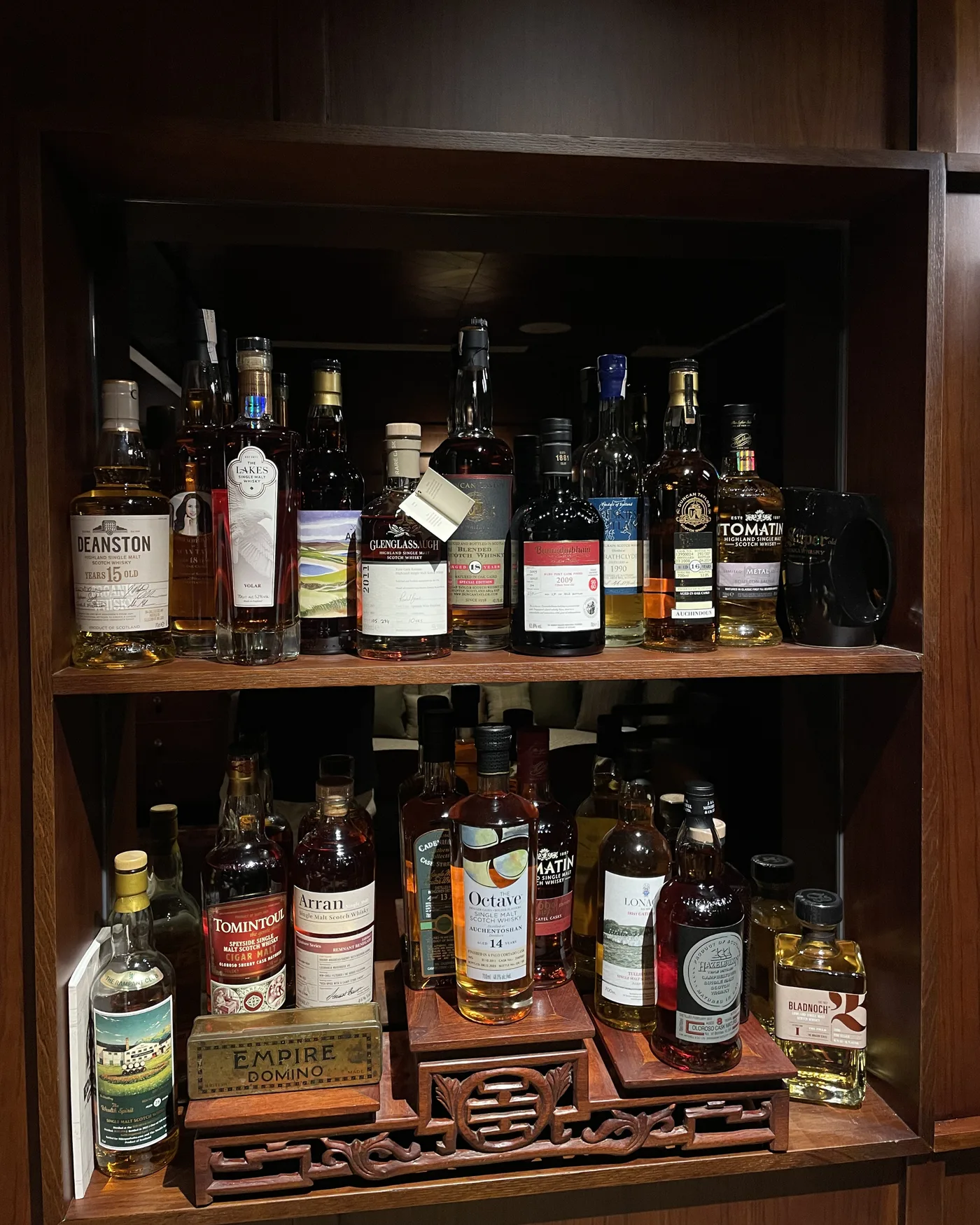
Members constantly bring new whiskies into the club. Tap a region to see its character, signature distilleries, and how many bottles are on the shelf right now.
A small Hebridean island whose peat-fired malts taste like the sea is in the room with you.
The largest, most varied region — coastal whiskies in the north, lighter expressions toward the south, almost everything in between.
Concentrated along the river Spey. Sherry-forward, fruit-driven, and home to more distilleries than anywhere else in the world.
Once the whisky capital of the world. Now three distilleries and a cult following — coastal, oily, gently smoked.
Orkney, Skye, Mull, Arran, Jura, Lewis. Distilleries scattered across the North Atlantic with as much in common as in difference.
Light, grassy, often triple-distilled. The aperitif end of Scotch, gentle and floral.
Triple-distilled and notably smooth. Pot still whiskey is a uniquely Irish style, full of spice and tropical fruit.
Refinement is the house style. Mizunara casks lend sandalwood and incense; the country’s climate ages whisky differently from anywhere else.
Bourbon (Kentucky, mostly), Tennessee whiskey, and a renaissance of rye. Big oak, big sugar, big personality.
Rye is the soul of Canadian whisky — long-aged, lean, often the best-kept secret in North America.
A young scene leaning into Mexican corn varietals — Abasolo distils ancestral Cacahuazintle maize for whisky unlike any other.
Tasmania leads the way. Small-cask maturation in a temperate climate produces whiskies of unusual depth for their age.
A rising scene — Pernod Ricard, Diageo, and Chinese-led producers all building distilleries in the highlands of Sichuan and Yunnan.
A young modern industry — the first English single malt in over a century opened in 2003. Quietly excellent.
Tiny output but distinctive. Cardrona and others draw on alpine water and a maritime climate.
Better known for vodka, but boutique single malts are appearing — most famously the now-revered Kozuba & Sons.
Home soil. The local whisky scene is in its infancy — but tropical maturation will produce something unique here, and we will be among the first to know.
Sub-tropical climate accelerates maturation dramatically. Kavalan is barely two decades old yet competes with the world's best.
Heat and humidity force whisky to age fast and lose volume to the angels. Amrut and Paul John have made Indian single malt globally collectible.
Cold maturation and Scandinavian oak give Mackmyra a distinct, juniper-tinged character no Scotch quite matches.
Brittany pioneers, Cognac houses turning their hand to whisky, and Bordeaux-cask finishes that read like a wine list.
Welsh whisky vanished for a century and returned with Penderyn. Madeira and bourbon casks, soft mountain water.
Bavarian distillers like Slyrs took Scotch traditions and ran them through Alpine spring water and beech-smoked malt.
Dutch distillers turned grain-spirit roots (genever, korenwijn) into a flourishing single-malt scene led by Millstone.
Beer-cask aged Säntis Malt and Alpine micro-distilleries — small output, distinctive character, glacial water.
A young scene with old roots. Hammer Head was the first Czech single malt; Gold Cock and others followed.
Everywhere else the still has reached — and the most surprising bottles in the Rampant Room often come from there.