

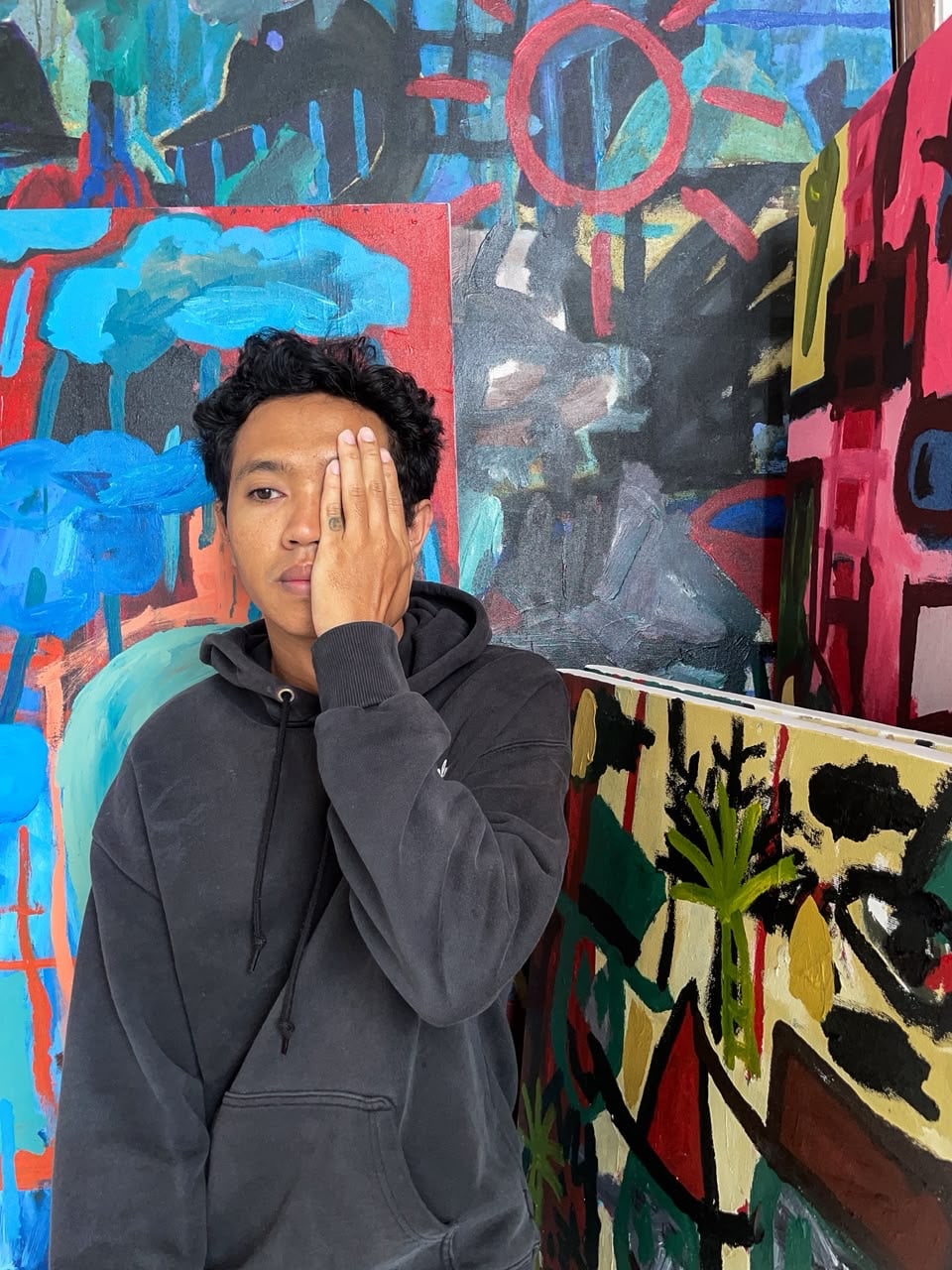
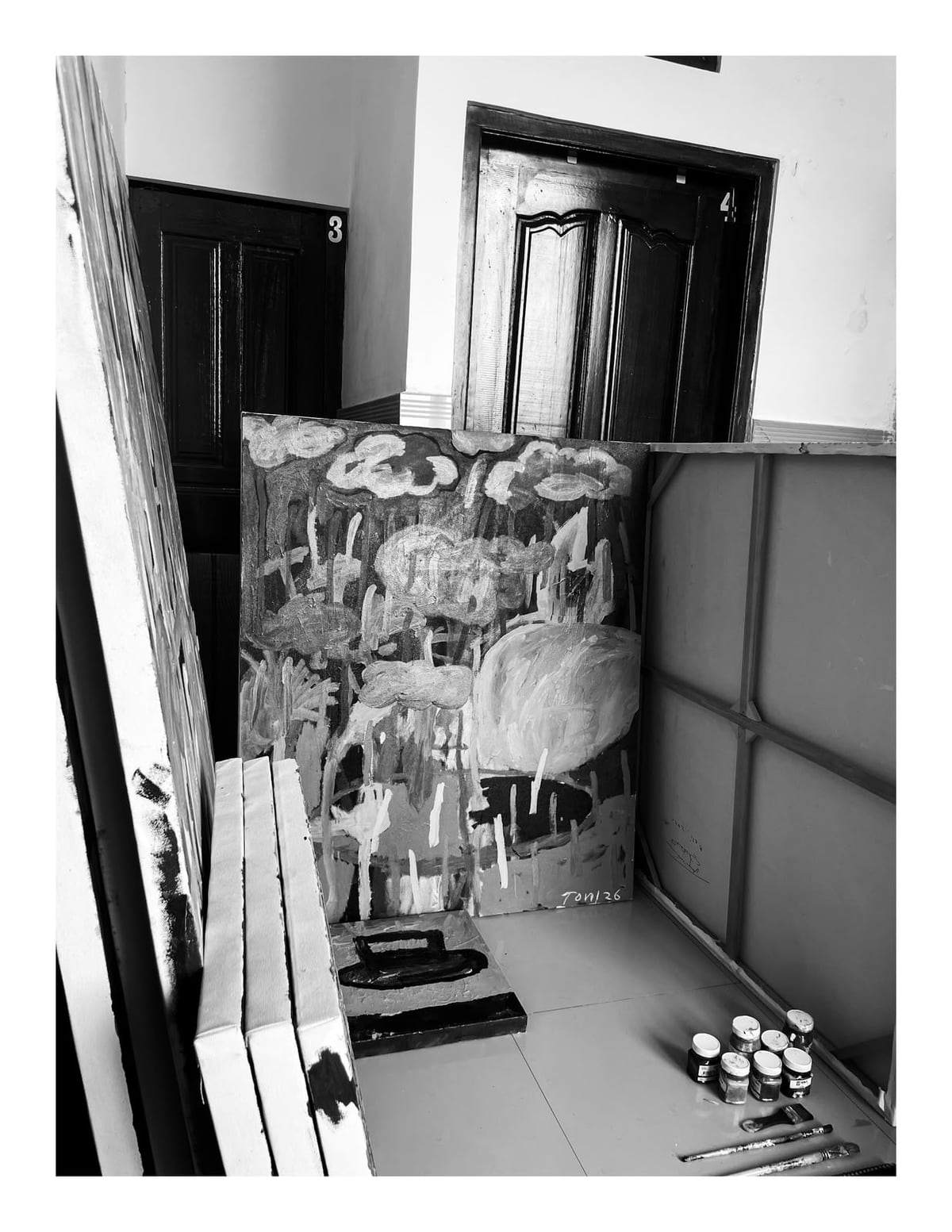
In November 2026 The Studio gives its walls to Rizal Fathoni, a painter who lives and works between Bali and Surabaya, for a solo exhibition — the second collaboration in Duncan Taylor's Octave programme after Quỳnh Anh Lê's.
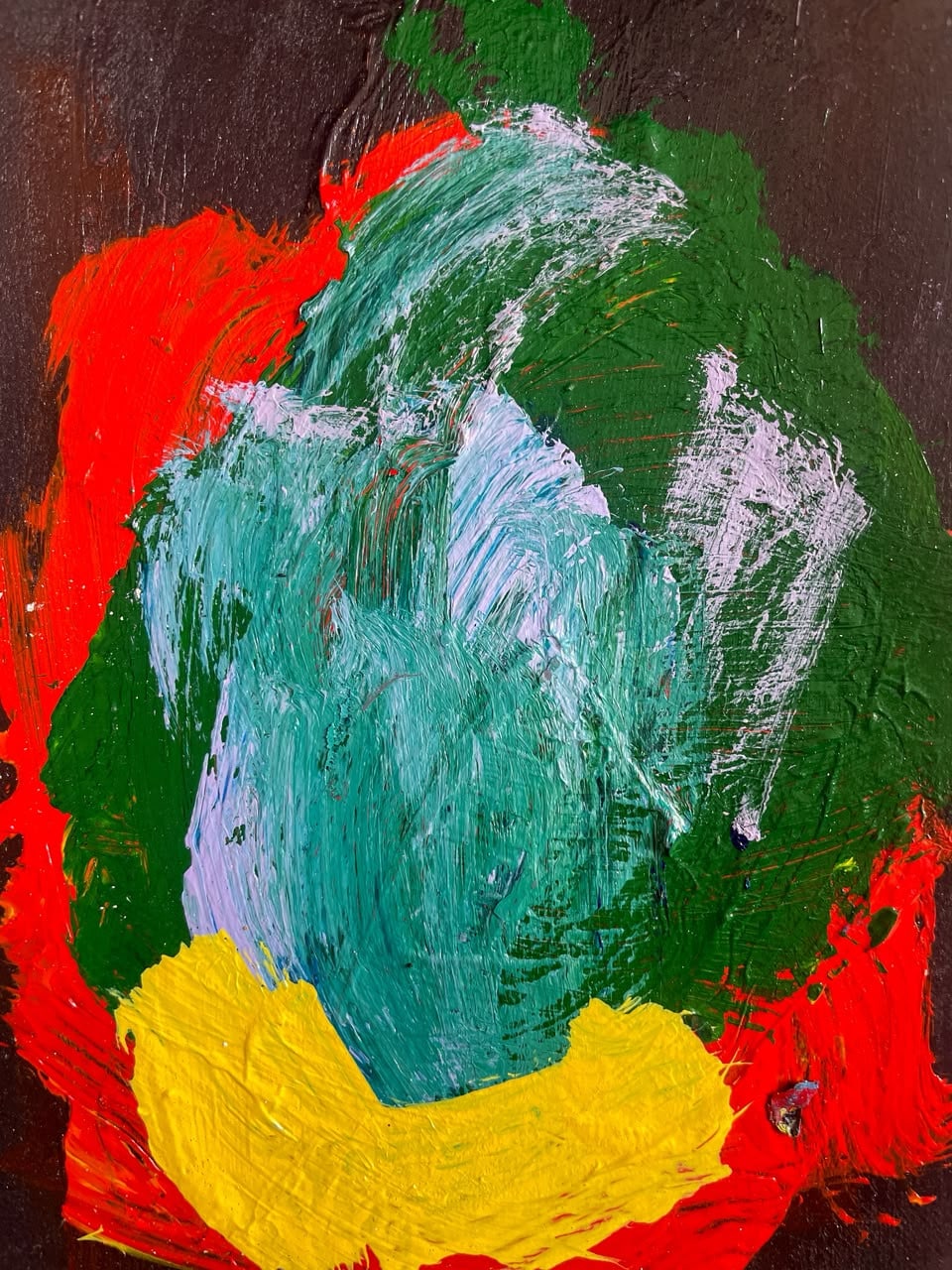
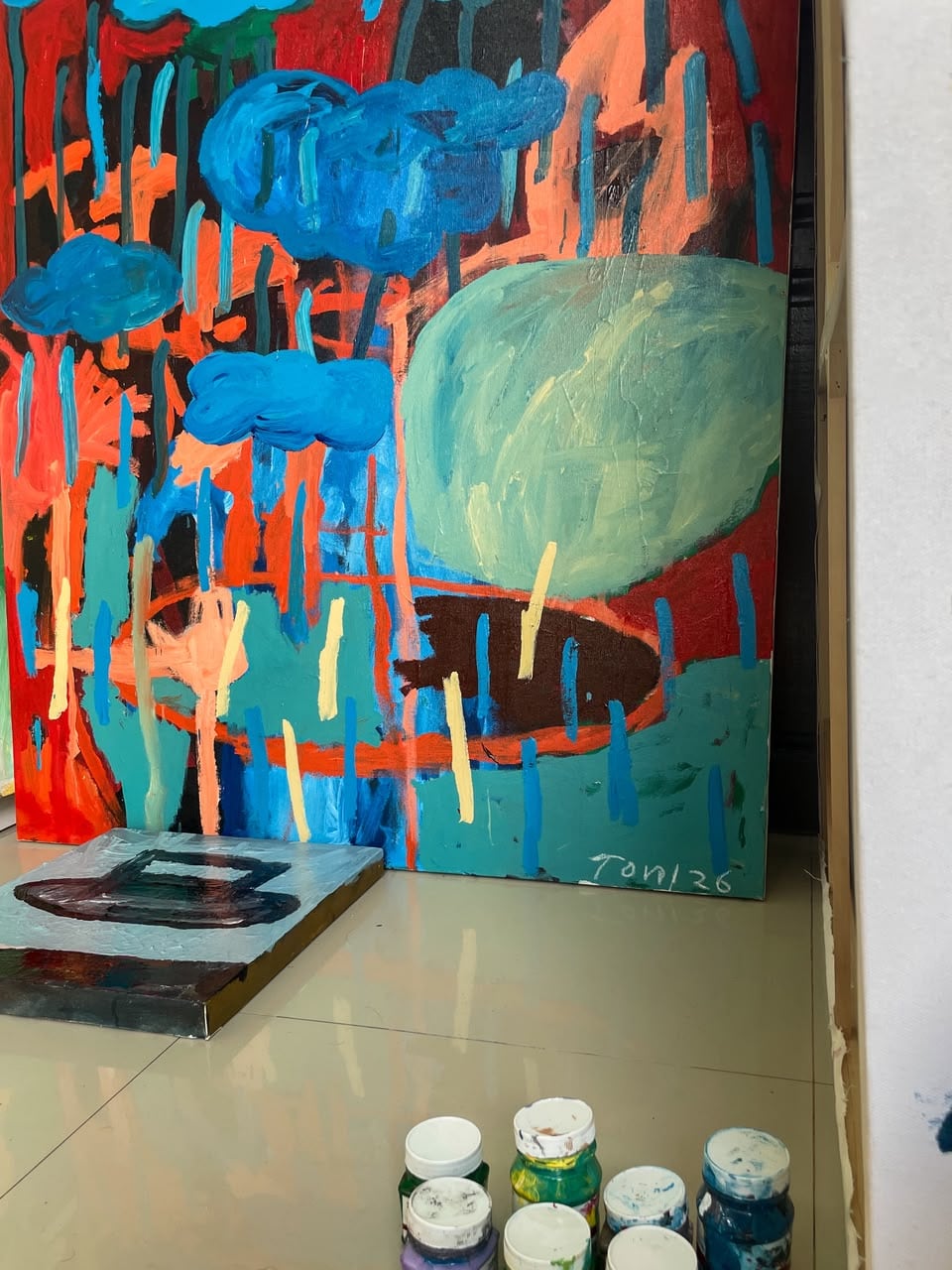
Where the first was built on softness and stillness, this one carries a different charge. The artist's references are smoke, rain, rough texture and intensity, and the work is stark where hers was quiet: red, black, dark grey, white.
A whisky is being chosen for him, and it will be introduced on the opening night.
Eighty bottles will be released, each label carrying a different fragment of the flagship painting. One bottle is painted by hand and goes to charity auction, alongside the one Quỳnh Anh painted — three works by three artists, to be auctioned together when the series closes.
Two evenings in The Studio, 10 and 11 November, for sixty to eighty invited guests. An exhibition opening rather than a party.
Guests are met with the first cocktail and given time to move through the room before anything is asked of them. Canapés come round shortly after.
Rizal speaks about the exhibition and his practice, with an interpreter to hand. The whisky is introduced after him, with a small pour for every guest, and the second pairing arrives a little later.
Then the room is open — the artist available to talk to for the rest of the evening, and the limited edition open to members.
On the 13th he paints live at the Independence Palace.
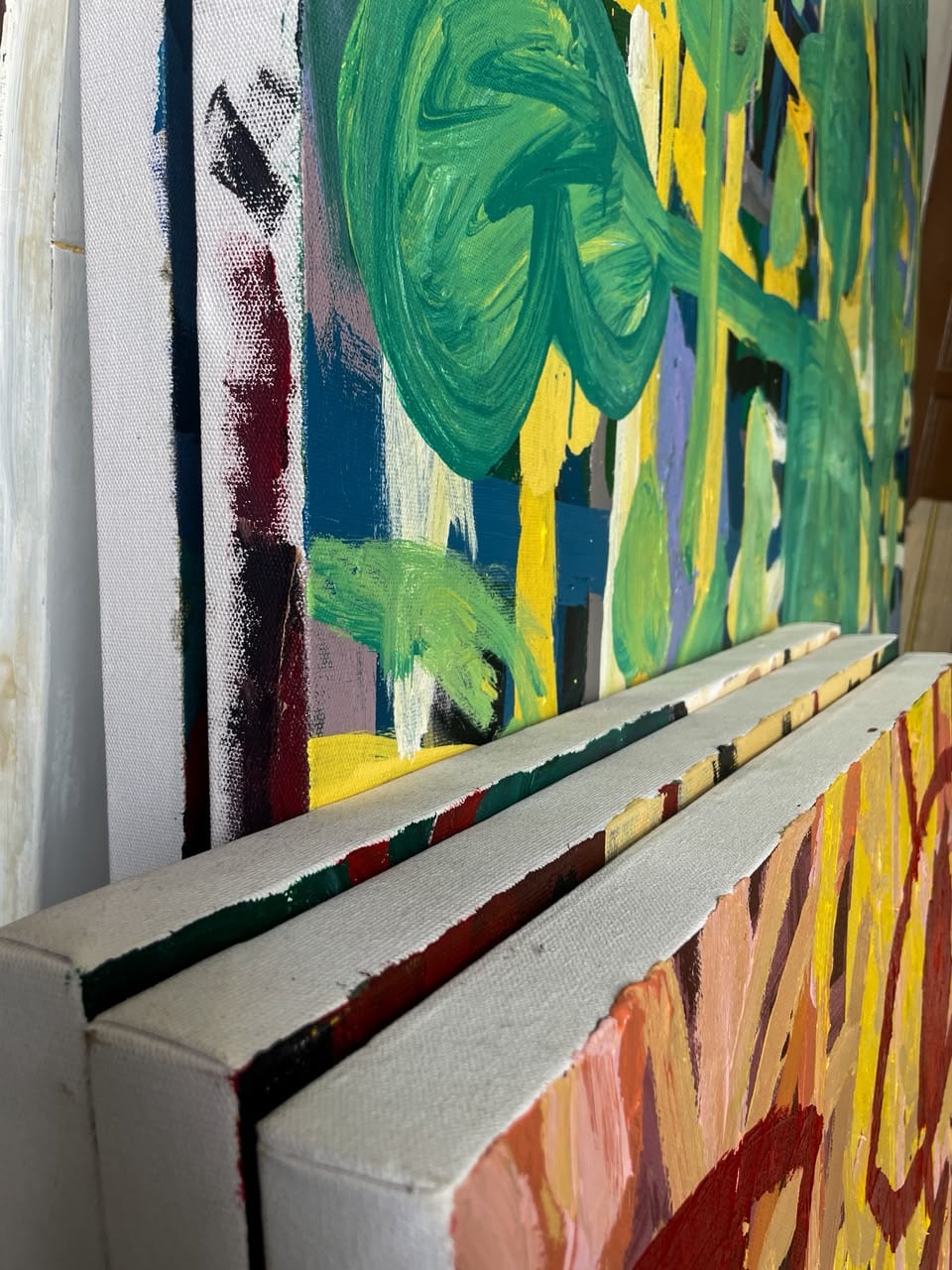
The exhibition hangs in The Studio until February.
Two canapés, each one bite, no cutlery. Served on dark slate and black ceramic — the room is stark and the food should not apologise for it.
Char & Contrast — drawn from the paintings. Meat-forward and visibly charred, bold with salt and dark spice, rough enough to look hand-formed rather than arranged. The palette is the canvas's: dark, red, black, one point of brightness. Nothing delicate, nothing sweet.
Malang Memory — drawn from the artist rather than the work. Rizal's own references are gentler than his paintings suggest: the small Javanese city he comes from, the smell of rain and old books, pastel de nata, the forest. Warm, soft, a little sweet, Indonesian and Portuguese at once — a moment of reprieve inside the intensity.
Comfort, not dessert.
Two cocktails, dry and low in sweetness, served clear or dark. No pastel tones, and garnish only where it does something.
Smoke & Stone — drawn from the paintings. A smoky base, savoury rather than sweet, finishing on leather and earth with something darker underneath. Meant to feel like picking up a river stone that has been sitting in the sun.
Rain & Oud — drawn from the artist. Petrichor: wet earth, green leaves, the air after a downpour, with coffee and oud behind it. Served cool but not iced, and grounding rather than refreshing. Like sitting on a porch in Malang watching the rain stop.
Both are made in the Source & Origin Lab.
Rizal Fathoni, known as Toni (b. Surabaya, 1998), is an artist whose practice emerges from memory, personal experience, anxieties, and the pleasures found within everyday life. Born and raised in Surabaya during a period marked by Indonesia's economic crisis in the late 1990s, his early life became part of a personal landscape of memory that continues to inform the way he perceives life and approaches his artistic practice.
Toni's relationship with art began in childhood. From kindergarten, he was already actively involved in art activities and competitions, gradually developing an intuitive relationship with image-making and visual expression. His artistic sensibility was also deeply influenced by his father, an architect with a strong ability to draw. Through this relationship, art was introduced to Toni not merely as an activity, but as a way of seeing, observing, and understanding the world.
In his practice, Toni often finds himself working through what might be described as a process of memory. His works emerge from accumulated experiences, personal anxieties, moments of pleasure, and seemingly ordinary encounters that leave traces within him. As a result, his works can shift between the playful and the contemplative, between spontaneity and seriousness, and at times between intimacy and confrontation.
Play is an essential part of Toni's creative process. Within his works, he allows himself the freedom to play without having to fully control the outcome. This play can become a form of protest, a reminder, an escape, or simply a way of engaging with things that cannot always be articulated through language. For Toni, seriousness does not necessarily require rigidity. Instead, it can coexist with intuition, freedom, humor, and experimentation.
The making of each work follows its own rhythm. Some works emerge almost instinctively and within a short period of time, while others demand a longer process of repetition, reconsideration, and revision. Rather than imposing a fixed methodology, Toni allows each work to determine its own pace and direction.
At the core of his practice is a commitment to honesty. Toni does not seek to disguise what lies behind each work. For him, making art is inherently difficult because a work is never simply an image or an object; it carries a part of the artist himself. Each piece becomes a personal record of what he has experienced, questioned, remembered, enjoyed, resisted, and perhaps failed to fully understand.
Ultimately, Toni's practice is an on going attempt to understand himself through art. He does not regard artistic practice as a destination or a finished achievement, but as a continuous process of questioning, refining, and discovering new possibilities. To make art, for Toni, is to remain willing to confront oneself and to keep trying to make something more honest each day.